
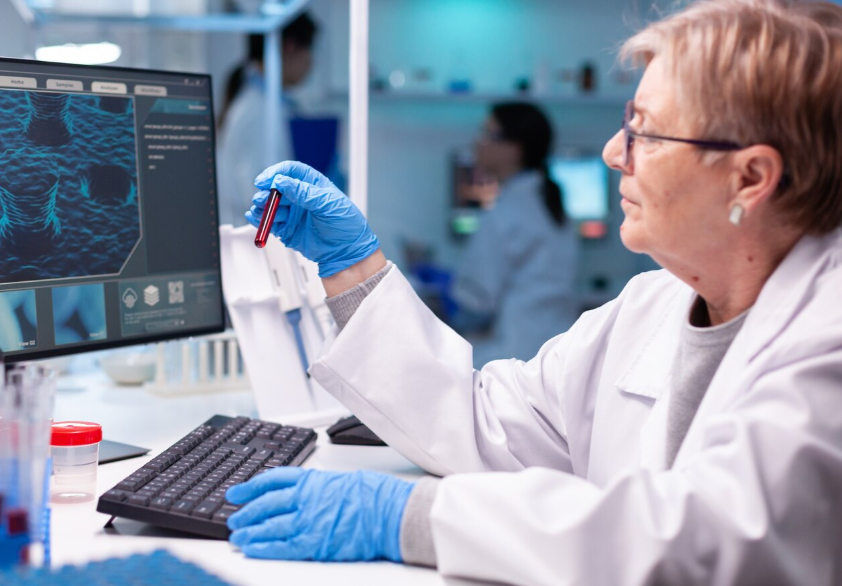
Tumor-agnostic biomarkers and AI biomarkers are converting the way we look at, diagnose, and treat diseases within the fast-converting international healthcare landscape these days. These groundbreaking technologies go beyond the usual “one-size-fits-all” methods by giving specific information based on each person’s unique molecular and genetic profile. Nexomic medicine is the name given to this new era. It combines powerful data analytics with multi-omic sciences to bring precision intelligence to life. This gives doctors, scientists, and engineers the power to make treatment decisions that really matter.
What Tumor-Agnostic Biomarkers Are and Why They Matter
Tumor-agnostic biomarkers look for genetic or molecular changes that can happen in many different types of cancer, unlike traditional cancer tests that look at the tumor’s location or type. This method is a big step toward precision oncology, where treatments are chosen based on biomarkers instead of where the tumor came from.
Tumor-agnostic biomarkers have a number of important benefits, such as:
- Making it possible to apply targeted medicines to a wider range of cancer types.
- Letting people find actionable mutations early.
- Helping to keep an eye on how well the treatment is working in real time.
Doctors may use these biomarkers to tailor treatment plans to each patient, which will improve both patient outcomes and the efficiency of the healthcare system as a whole. This idea shows how important it is for innovations to reach people; they connect research with bedside care.
The Strength of AI Biomarkers in Predictive Medicine
In digital medication technology, AI Biomarkers signify the mixing of artificial intelligence with biomedical information. Using powerful algorithms, these biomarkers examine large quantities of facts from genomes, proteomics, and other omic sciences to discover patterns that wouldn’t be obvious through the use of general methods.
With AI Biomarkers, doctors can:
- Make more accurate predictions about how a disease will get worse.
- Find the best treatment options before starting treatment.
- Use adaptive learning models to constantly improve diagnosis.
With this kind of precise intelligence, healthcare goes from being reactive to being predictive. Machine learning algorithms trained on multi-omic data are changing how doctors diagnose diseases. They let doctors make faster, data-driven judgments that save lives and money. Nexomic platforms are leading this shift, integrating AI biomarkers into real-world healthcare systems for improved decision-making.
Linking Tumor-Agnostic Biomarkers with AI Biomarkers
The real power of modern medicine comes from the combination of tumor-agnostic biomarkers and AI biomarkers. When combined, they make a strong framework that helps doctors comprehend diseases at their most basic molecular levels. AI-driven algorithms can look at data that isn’t specific to one type of cancer and find common genetic markers. This makes it possible to create treatments that work for many types of cancer.
This integration not only speeds up the process of finding new drugs, but it also makes patient care much more personal. It is the embodiment of data-driven precision medicine, where algorithms power every insight and a deep grasp of biology guides every therapy.
Combining these biomarker methods has the following benefits:
- It makes it easier to find universal therapeutic targets.
- It makes diagnosis and prognosis more accurate.
- It cuts down on trial and error when choosing a treatment.
Nexomic solutions are pioneering this integration, making precision medicine more accessible and effective across the healthcare ecosystem.
Giving the next generation of medicine more strength with multi-omic insights
“Nexomic” is a combination of “Nex” (the next era of data-driven medicine) and “Omic” (the science underpinning accuracy). It perfectly describes this change. Researchers are developing a future where individualized therapy is scalable and available by combining AI biomarkers with tumor-agnostic biomarkers. This change is being driven by a group of young doctors, scientists, and engineers who are combining artificial intelligence with multi-omic data to provide useful information at both the bedside and on a large scale.
Conclusion
It’s apparent what the future of medicine will be: smart, data-driven, and based on accuracy. Tumor-agnostic biomarkers and AI biomarkers are at the center of this change. They connect scientific discoveries with patient care. The aim is simple but important: to make sure that every breakthrough reaches the people who need it most. This is what we do as we continue to unlock the full potential of multi-omic intelligence. Visit nexomic.com to learn more about how next-generation biomarker intelligence is changing the future of precision healthcare.